I may earn a commission at no extra cost to you. #ad
Free Guide: The Best and Worst Gas Station Snacks for Road Trips
Jump to Section
Navigating the Road Trip Snack Aisle
We’ve all been there: You’re three hours into an eight-hour drive, the excitement of the open road has worn off, and hunger is setting in. You pull into a neon-lit gas station, and the aisles are filled with wall-to-wall processed sugar, sodium-heavy chips, and questionable hot-dog-roller creations. It’s easy to make a choice that leaves you feeling sluggish, bloated, or experiencing a massive sugar crash fifty miles later.
Choosing the right gas station snacks isn’t just about health; it’s about safety and stamina. High-sugar snacks cause insulin spikes followed by rapid energy drops, making you sleepy behind the wheel. On the other hand, a balance of protein, fiber, and healthy fats keeps your brain sharp and your hunger satisfied. This guide breaks down exactly what to reach for and what to leave on the shelf.
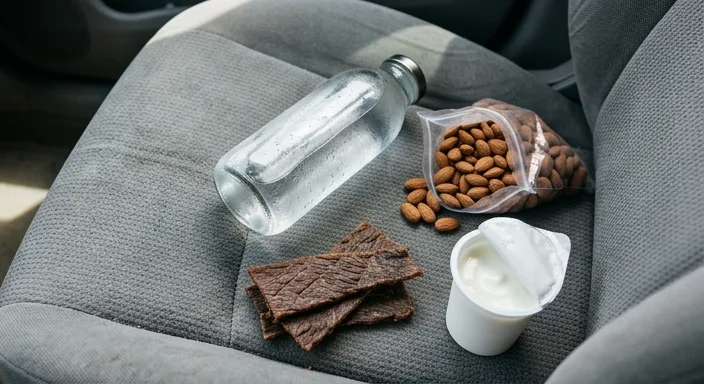
The High-Protein Heroes
Protein is the ultimate road trip fuel because it takes longer to digest, keeping you full for longer. When you’re at the gas station, look for these protein-packed winners:
- Beef or Turkey Jerky: This is the classic road trip snack for a reason. Look for brands with lower sugar content (avoid "Teriyaki" flavors which are often sugar bombs). Aim for "Old Fashioned" or "Original" styles.
- Hard-Boiled Eggs: Many modern convenience stores now carry pre-peeled, two-pack hard-boiled eggs in the refrigerated section. They are pure protein and provide essential choline for brain function.
- Greek Yogurt: If there is a refrigerated case, look for plain or low-sugar Greek yogurt. It offers a probiotic boost and a significant amount of protein per serving.
- String Cheese: A simple, portion-controlled way to get protein and calcium without a lot of additives.
Smarter Fats for Long-Haul Focus
Healthy fats provide sustained energy. They don’t give you the "buzz" of sugar, but they keep the engine running smoothly. The key here is portion control, as nuts and seeds are calorie-dense.
Roasted Almonds or Pistachios: Look for dry-roasted or raw options. Pistachios are especially great because the act of shelling them slows down your eating pace, making it harder to mindlessly consume a thousand calories while staring at the highway.
Sunflower Seeds: A long-time favorite for truck drivers, sunflower seeds keep your mouth busy and provide healthy fats. Just watch the sodium; if you can find low-sodium or unsalted versions, your heart (and thirst levels) will thank you.
Fresh Finds in Unexpected Places
Believe it or not, the "fresh" section of the gas station has expanded significantly over the last decade. Many major chains now stock fresh fruit and vegetables near the checkout or in refrigerated kiosks.
Whole Fruit: Bananas, apples, and oranges are the gold standard. They come in their own natural packaging and provide fiber and natural sugars for a gentle energy lift. Hummus and Veggie Cups are another excellent find—carrots and celery with a small cup of hummus provide a satisfying crunch and fiber.
The Sugar Crash Villains: Worst Snacks
While everything is fine in moderation, some snacks are particularly detrimental to a driver's focus and comfort. Avoid these "Worst" list offenders:
- Donuts and Honey Buns: These are almost entirely refined flour and sugar. You’ll feel great for 20 minutes and then feel like you need a nap for the next two hours.
- Large Bags of Salty Chips: The combination of high sodium and industrial seed oils can lead to significant bloating and water retention. Being "puffy" and thirsty while sitting in a car seat for hours is a recipe for discomfort.
- Corn Nuts: While crunchy and satisfying, they are incredibly high in sodium and very hard on your teeth—not something you want to deal with in the middle of a trip.
- Gas Station Sushi: This is a classic safety warning. Unless you are at a very high-end travel center, the risk of foodborne illness from raw fish in a convenience store setting is simply not worth the risk during a long drive.
Hydration: Fuel or Fatigue?
What you drink is just as important as what you eat. Dehydration is a leading cause of fatigue and loss of concentration. However, "hydration" doesn't mean "sugar water."
The Best: Plain sparkling water, unsweetened iced tea, or just a large bottle of spring water. If you need electrolytes, look for zero-sugar versions. The Worst: Standard sodas and large energy drinks. While the caffeine might help temporarily, the massive sugar content will lead to a crash that usually hits right when you're looking for your exit.