Free Guide: How to Read Snack Labels Like a Pro and Avoid Hidden Sugars
Jump to Section
Walking down the snack aisle can feel like navigating a minefield of marketing claims. "All Natural," "Low Fat," and "Heart Healthy" scream from every package, but the real story is hidden on the back. For the average snacker, the Nutrition Facts panel looks like a confusing wall of numbers. However, mastering the art of reading snack labels is the single most important skill you can develop for long-term health and weight management.
In this guide, we will break down exactly how to audit your snacks in under 30 seconds, ensuring you never fall victim to "hidden" sugars or deceptive serving sizes again.
The Serving Size Trap
The very first thing you must look at—before calories, before fat, before anything else—is the Serving Size. Manufacturers are notorious for manipulating serving sizes to make a snack look healthier than it is. A standard bag of chips might look like a single serving, but the label may reveal it contains 2.5 servings.
If the label says 150 calories per serving and you eat the whole bag (2.5 servings), you’ve actually consumed 375 calories. Always do the math first. If the serving size is unrealistically small (e.g., "3 crackers" or "2 tablespoons of granola"), it’s a red flag that the product is likely dense in calories and sugar.
The Ingredient List Secrets
If the Nutrition Facts panel is the "what," the ingredient list is the "how." Ingredients are listed in descending order by weight. This means the first three ingredients make up the vast majority of what you are eating.
If the first ingredient is sugar, enriched flour, or a processed oil, the snack is essentially "empty calories." A "pro" tip is to look for short ingredient lists. Generally, if you can’t pronounce half the ingredients or the list looks like a chemistry textbook, your body will have a harder time processing it.
Identifying Hidden Sugars
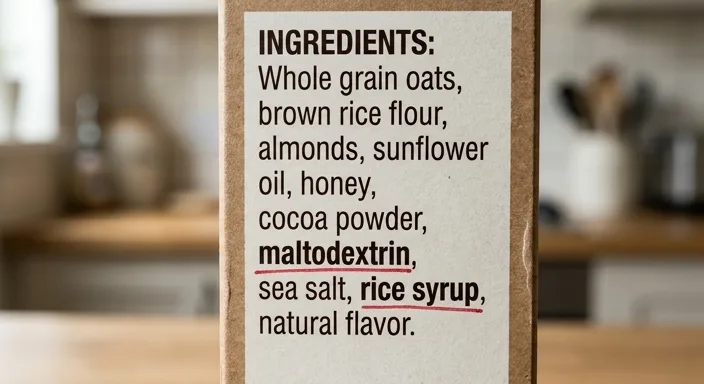
Sugar is the ultimate master of disguise. Food scientists use over 60 different names for sugar to prevent "Sugar" from appearing as the first ingredient on the list. By using three or four different types of sweeteners, they can spread the weight out so that each individual sugar appears further down the list.
Watch out for these common aliases:
- The "-ose" family: Sucrose, fructose, dextrose, maltose, lactose.
- Syrups: High fructose corn syrup, rice syrup, agave nectar, malt syrup, golden syrup.
- "Natural" sounding names: Cane juice, fruit juice concentrate, coconut sugar, barley malt, molasses.
- Dextrins: Maltodextrin, which can spike blood sugar even faster than table sugar.
Total Sugars vs. Added Sugars
Thanks to updated FDA regulations, most labels now distinguish between Total Sugars and Added Sugars. This is a game-changer for snackers. Total sugars include naturally occurring sugars found in fruit (fructose) or milk (lactose). Added sugars are those added during processing.
For example, a container of plain yogurt has naturally occurring lactose, but a container of strawberry yogurt might have 15g of added sugar. Your goal should be to keep added sugars as close to zero as possible. The American Heart Association recommends no more than 25g-36g of added sugar per day for adults.
The Fiber and Protein Satiety Ratio
A "pro" snacker doesn't just look for what to avoid; they look for what to include. To avoid the mid-afternoon energy crash, your snacks must contain Fiber and Protein. These two nutrients slow down the digestion of carbohydrates, providing a steady stream of energy rather than a sharp spike and fall.
A good rule of thumb is the 5:1 Rule: For every 5 grams of carbohydrates, look for at least 1 gram of fiber. Additionally, aim for snacks that provide at least 5 grams of protein per serving to help signal to your brain that you are full.
Beware of Marketing Buzzwords
Do not let the front of the package fool you. Here is what those buzzwords often actually mean:
- "Made with Real Fruit": Usually means there is a tiny amount of fruit puree concentrate mixed with sugar and gelatin.
- "Multigrain": Simply means the product contains more than one type of grain. They are often still highly refined grains rather than "Whole Grains."
- "Low Fat": Often means the manufacturer added extra sugar or salt to make up for the lost flavor from removing fat.
- "Gluten-Free": This is a medical necessity for some, but for others, it’s a health halo. Many gluten-free snacks use high-glycemic starches like potato or tapioca starch to mimic the texture of wheat.
Frequently Asked Questions
Is Maltodextrin worse than sugar?
In some ways, yes. Maltodextrin has a higher glycemic index (GI) than table sugar, meaning it can cause an even sharper spike in your blood glucose levels. It is often used as a filler in savory snacks and powdered drinks.
How much sodium should be in a healthy snack?
Look for snacks that have less than 140mg of sodium per serving. "Low sodium" is a regulated term that specifically means 140mg or less. Excess sodium can lead to bloating and high blood pressure.
What is the most deceptive thing on a snack label?
The "No Sugar Added" claim is often very deceptive. This doesn't mean the product is low in sugar; it just means no extra sugar was added. A "No Sugar Added" fruit snack can still be 100% sugar from fruit concentrates, which affects your body similarly to corn syrup.