Free Guide: How to Combat Late-Night Cravings with Low-Calorie Snacks
The Science: Why Late-Night Cravings Happen
We’ve all been there: the house is quiet, the lights are low, and suddenly, the kitchen is calling your name. But why does our willpower seem to dissolve after 9:00 PM? Understanding the biological triggers can help you regain control.
Our bodies operate on a circadian rhythm that influences hormones like ghrelin (the hunger hormone) and leptin (the fullness hormone). Research suggests that ghrelin levels naturally peak in the evening, while leptin levels may drop. This biological "perfect storm" makes us feel hungrier just as our activity levels are lowest.
Furthermore, evening hunger is often tied to cortisol levels. If you’ve had a stressful day, your body may crave "hyper-palatable" foods—those high in fat and sugar—as a way to trigger a dopamine release and self-soothe. Recognizing that your craving might be emotional or hormonal rather than physical is the first step toward managing it.
Distinguishing Hunger from Boredom
Before reaching for the cupboard, perform a quick self-assessment. Are you physically hungry, or are you just "mouth hungry"? Physical hunger usually builds slowly and can be satisfied by a variety of foods (even an apple). Emotional or boredom-based hunger usually strikes suddenly and focuses on a specific "comfort" food.
One of the most effective ways to test this is the "Broccoli Test." Ask yourself: "Would I eat a bowl of steamed broccoli right now?" If the answer is yes, you are likely physically hungry and need a snack. If the answer is no, you are likely seeking a distraction or emotional comfort.
Top 10 Low-Calorie Snacks for Late Night
When the hunger is real, you don't have to starve. The goal is to find snacks that provide volume or protein to keep you full without loading up on empty calories that disrupt your sleep.
- Air-Popped Popcorn: At only 30 calories per cup, you can have a large portion. Avoid heavy butter; use a sprinkle of sea salt or nutritional yeast instead.
- Greek Yogurt: A small bowl of plain non-fat Greek yogurt provides protein and calcium. Protein is excellent for muscle repair during sleep.
- Frozen Grapes: These take longer to eat and provide a satisfying, candy-like texture for very few calories.
- Cottage Cheese: Rich in casein protein, which is slow-digesting and helps keep hunger at bay throughout the night.
- Cucumber Slices with Hummus: High water content in the cucumbers provides volume, while a tablespoon of hummus adds flavor and fiber.
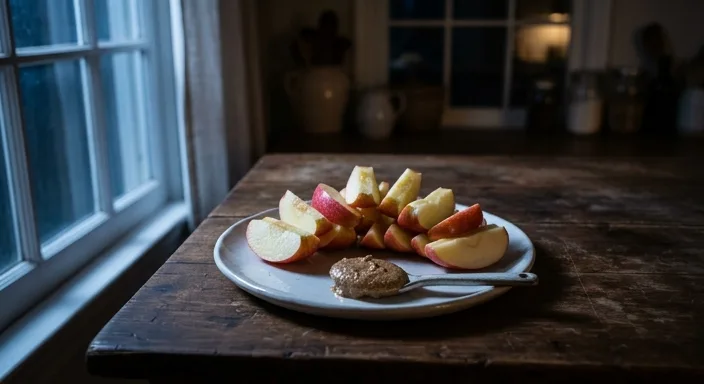
- A Small Apple with a Teaspoon of Peanut Butter: The fiber and healthy fats create a balanced, satisfying snack.
- Hard-Boiled Egg: An easy, pre-portioned 70-calorie snack that packs a protein punch.
- Edamame: Lightly salted edamame provides protein and fiber, and the act of deshelling them slows down your eating.
- Cherry Tomatoes: Very low in calories and surprisingly refreshing.
- Herbal Tea: While not a food, a warm cup of chamomile or peppermint tea can often satisfy the "hand-to-mouth" habit and soothe the stomach.
Habits to Stop Nighttime Overeating
If you find yourself consistently overeating at night, it’s time to look at your daytime habits. Most late-night binges are the result of "under-fueling" during the day. If you skip breakfast or have a tiny lunch, your body will demand those missing calories when you finally relax at night.
Try these strategies to break the cycle:
- Eat Enough Protein During the Day: Aim for protein at every meal to keep blood sugar stable.
- Brush Your Teeth Early: Brushing your teeth right after dinner sends a psychological signal to your brain that the "eating window" is closed. Plus, food rarely tastes good with a minty mouth.
- Turn Off the Screens: Distracted eating is dangerous. If you eat while watching TV, your brain doesn't register the fullness signals as effectively.
- Hydrate: Thirst is often mistaken for hunger. Drink a glass of water and wait 15 minutes before deciding if you truly need a snack.
The Vital Connection Between Sleep and Snacks
Poor sleep is a leading cause of weight gain and uncontrollable cravings. When you are sleep-deprived, your body increases ghrelin production and decreases leptin. This makes you crave high-calorie, energy-dense foods the following day.
By choosing low-calorie, healthy snacks instead of sugary treats, you avoid the blood sugar "spike and crash" that can wake you up in the middle of the night. Foods like walnuts or tart cherry juice actually contain small amounts of melatonin, which may help you fall asleep faster. Focus on snacks that support your rest rather than those that require your digestive system to work overtime while you sleep.
Frequently Asked Questions
Weight gain is primarily determined by your total daily caloric intake. However, eating at night is often associated with weight gain because people tend to choose high-calorie, processed snacks during this time.
Most experts recommend finishing your last meal 2–3 hours before bed. This allows for proper digestion and prevents acid reflux.
Yes, fruit is a great low-calorie option. Berries are particularly good because they are high in fiber and lower in sugar than tropical fruits like mango or pineapple.