Free Guide: How to Prep Cheap Healthy Snacks for the Entire Week
Jump to Section
Why Batch-Prepping Snacks is a Game Changer
We’ve all been there: it’s 3:00 PM, your energy is flagging, and the nearest vending machine or convenience store is calling your name. Unfortunately, "convenience" usually comes with a high price tag and a long list of processed ingredients. By learning to prep your own snacks, you reclaim control over both your wallet and your nutrition.
Batch-prepping isn't just about saving money; it's about decision fatigue. When you have a container of sliced peppers and hummus ready to go, you don't have to "decide" to be healthy—you simply reach for what's available. Over a month, this habit can save you upwards of $100 and thousands of calories from hidden sugars and fats found in pre-packaged "health" bars.
Essential Tools for Efficient Snack Preparation
You don't need a professional kitchen to prep like a pro, but having the right containers is non-negotiable. If your snacks aren't easy to grab or they get soggy by Tuesday, you won't stick to the plan.
- Glass Mason Jars: Perfect for parfaits or veggie sticks. They keep food crisp and are infinitely reusable.
- Silicone Stash Bags: A sustainable alternative to single-use plastics for nuts, seeds, or homemade trail mix.
- Portion-Control Containers: Small 4oz or 8oz containers help ensure you're eating the right amount and make the "grab-and-go" aspect effortless.
- A Sharp Chef's Knife: This makes the "prep" part of snack prep much faster and safer.
Budget-Friendly Shopping Strategy for Snackers
The secret to keeping costs low is knowing what to buy and when. Health food stores often mark up snacks because of the packaging. When you buy the raw ingredients, you pay a fraction of the price.
Always prioritize seasonal produce. Apples in the fall and berries in the summer are significantly cheaper and taste better. Additionally, look to the bulk bins for items like oats, raw almonds, and sunflower seeds. You can buy exactly the amount you need, reducing both cost and food waste.
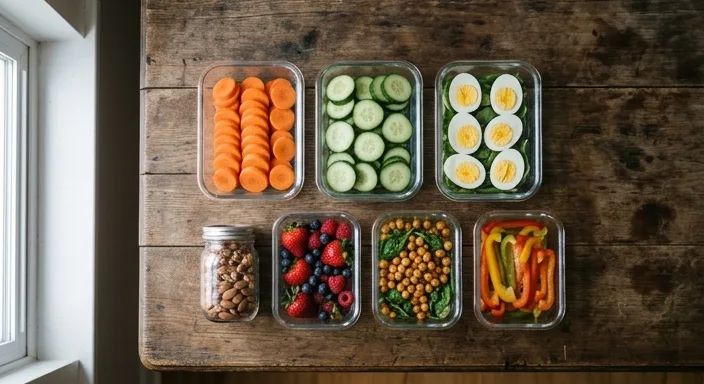
Don't overlook frozen options either. Frozen edamame or berries are often flash-frozen at peak ripeness and are much cheaper than fresh versions during the off-season. They work perfectly in smoothies or yogurt bowls.
Step-by-Step Guide to Your Weekly Snack Prep
Efficiency is key. You want to spend no more than 60 minutes on a Sunday afternoon preparing for the entire week. Follow this workflow:
- The Hard-Boiled Phase: Start your eggs or roast your chickpeas first. These take the longest and are passive (they sit on the stove or in the oven).
- The Wash and Dry: While the stove is busy, wash all your fruits and vegetables. Dry them thoroughly—moisture is the enemy of shelf-life.
- The Chop: Slice carrots, celery, cucumbers, or bell peppers into sticks.
- The Assembly: Portion out your nuts, crackers, or yogurt into individual containers.
- Labeling: If you're prepping for multiple people, a quick piece of masking tape with a name or date can prevent mid-week fridge confusion.
Top 5 Cheap and Healthy Snack Recipes
Looking for inspiration? These five options are high in fiber and protein, keeping you full until dinner without breaking the bank.
- Spicy Roasted Chickpeas: Drain a can of chickpeas, pat dry, toss with olive oil and chili powder, and bake at 400°F until crunchy. Cost per serving: ~$0.40.
- Greek Yogurt & Bulk Granola: Buy a large tub of plain Greek yogurt and add your own honey and bulk-bought oats. Cost per serving: ~$0.75.
- Ants on a Log 2.0: Celery sticks filled with natural peanut butter and topped with sunflower seeds instead of raisins for lower sugar. Cost per serving: ~$0.50.
- Hard-Boiled Eggs: The ultimate portable protein. Season with "Everything Bagel" seasoning for a flavor boost. Cost per serving: ~$0.30.
- DIY Trail Mix: Mix air-popped popcorn, raw almonds, and a few dark chocolate chips. The popcorn adds volume for very few calories and cents. Cost per serving: ~$0.60.
How to Keep Your Snacks Fresh All Week
There is nothing worse than opening a container of slimy cucumbers. To keep veggies crisp, place a folded paper towel at the bottom of the container to absorb excess moisture. For fruits like apples or pears that brown quickly, a quick toss in a diluted lemon juice solution will keep them looking fresh for days.
Store your "dry" snacks like nuts or roasted chickpeas in a cool, dark pantry rather than the fridge to maintain their texture. If you find you've prepped too much, most energy balls and muffins can be frozen and thawed in your lunch bag by noon.
Frequently Asked Questions
Most prepped snacks like chopped vegetables, hard-boiled eggs, and homemade energy balls stay fresh for 5 to 7 days when stored in airtight containers in the refrigerator.
The most budget-friendly options include roasted chickpeas, seasonal fruit, air-popped popcorn, carrots with homemade hummus, and bulk-bought Greek yogurt.
Yes! Energy balls, muffins, and even certain types of cheese or grapes can be frozen to extend their shelf life or for a refreshing cold treat.