Free Guide: Decoding Popular 'Healthy' Chips: Which Ones are Actually Good?
Jump to Section
Walking down the snack aisle today is a confusing experience. What used to be a simple choice between plain or barbecue potato chips has evolved into a sea of "veggie straws," "ancient grain puffs," and "kettle-cooked" alternatives. The packaging is earth-toned, the fonts look hand-drawn, and the claims—"Non-GMO," "Gluten-Free," "All Natural"—are plastered everywhere. But are these "healthy" chips actually better for you, or is it just clever marketing?
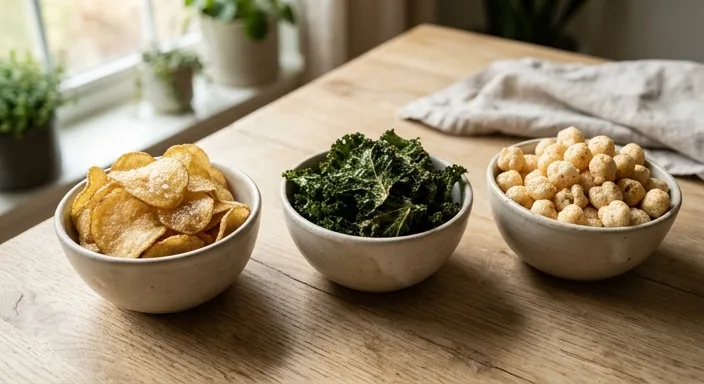
The "Health Halo" Marketing Traps
The "Health Halo" is a psychological effect where a single claim (like "Gluten-Free") makes a consumer believe the entire product is low-calorie or highly nutritious. When it comes to chips, manufacturers use several keywords to trigger this effect:
- "Veggie" Chips: Many popular veggie straws or chips are primarily made from potato flour, corn starch, and vegetable powders (like spinach or tomato powder) used mostly for color. Often, they contain no more nutrients than a standard potato chip.
- "Natural" or "Organic": While organic ingredients are grown without certain pesticides, an organic chip is still a processed snack. Organic sugar and organic sunflower oil still carry the same caloric density as their non-organic counterparts.
- "Gluten-Free": Unless you have Celiac disease or gluten sensitivity, this label doesn't equate to health. Most potato chips are naturally gluten-free anyway.
Ingredient Red Flags to Watch Out For
To truly decode a chip, you must ignore the front of the bag and flip to the Ingredient List. Here are three major red flags:
1. Highly Refined Seed Oils: If the chip is fried in "canola," "corn," "soybean," or "vegetable" oil, it may be high in inflammatory Omega-6 fatty acids. Look for chips cooked in avocado oil, coconut oil, or olive oil instead.
2. Maltodextrin and Yeast Extract: These are often used as fillers or flavor enhancers. While generally safe, they are highly processed. Maltodextrin has a higher glycemic index than table sugar, which can cause rapid spikes in blood glucose.
3. Artificial Colors and Flavors: Truly healthy chips don't need Yellow 5 or Red 40. The best snacks use real spices, sea salt, or dehydrated vegetables for flavor and color.
Baked vs. Fried: The Surprising Truth
Conventional wisdom says "Baked is Better," but the reality is more nuanced. Baked chips are lower in fat and calories, which sounds like a win. However, because the fat is removed, manufacturers often add more sugar and salt to maintain the flavor. Furthermore, the baking process can sometimes lead to higher levels of acrylamide, a chemical that forms in starchy foods when cooked at high temperatures.
Fried chips—specifically kettle-cooked ones—often have a lower glycemic index because the fat slows down the absorption of the carbohydrates. If you choose a fried chip made with a high-quality oil (like avocado oil), it might actually be more satiating than the baked version.
Comparing Alternatives: Chickpea, Lentil, and Root Veggies
If you are looking to move beyond the potato, there are several rising stars in the snack aisle. Here is how they stack up:
- Chickpea Chips: Usually higher in protein and fiber. These are excellent for staying full longer, but check that they aren't mostly corn flour with a tiny bit of chickpea flour added.
- Lentil Chips: Similar to chickpea chips, these offer a great crunch and a decent protein boost. They tend to be lower in fat than traditional potato chips.
- Whole Root Veggies: Chips made from sliced beets, sweet potatoes, or parsnips are fantastic—if they are actually sliced vegetables and not "flours" pressed into shapes. They provide more micronutrients like Vitamin A and potassium.
- Seaweed Snacks: Technically not a "chip," but they offer that salty crunch for very few calories and a high dose of iodine.
Our Top Picks for Nutritious Crunch
When searching for the best healthy chips, look for short ingredient lists and whole-food sources. Here are our gold standards:
- Siete Grain-Free Tortilla Chips: Made with cassava flour and avocado oil. They are paleo-friendly and use high-quality fats.
- Barnana Plantain Chips: Plantains are a great source of resistant starch. These chips (when cooked in coconut oil) are a nutrient-dense alternative to corn.
- Rhythm Superfoods Kale Chips: Since these are dehydrated rather than fried or baked at high heat, they retain much of the nutritional value of the kale.
- Beanitos: Made from whole beans, these are high in fiber, which helps regulate blood sugar and keeps you regular.
Frequently Asked Questions
Generally, yes. Plantains offer more fiber and vitamins (A and C) than white potatoes. However, check the oil used for frying; if they are fried in palm oil, the health benefits decrease.
Avocado oil is widely considered the best because it has a high smoke point and a heart-healthy monounsaturated fat profile. Coconut oil and extra virgin olive oil are also good choices.
Fiber slows down the digestion of the carbohydrates in the chip. This prevents a "sugar crash" and helps you feel satisfied with a smaller portion size.
Unfortunately, no. Most veggie straws are highly processed and contain very little actual vegetable nutrients. You are better off eating raw carrots or a real piece of dehydrated broccoli.